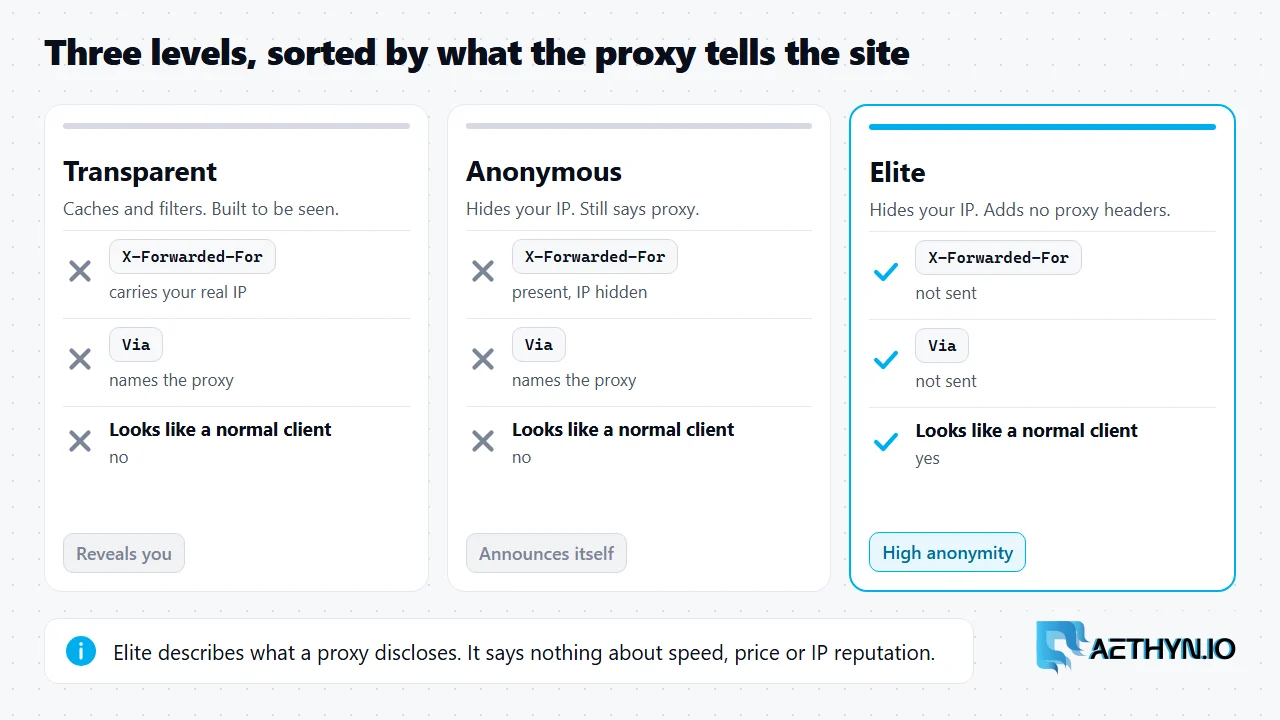
An elite proxy, also called a high-anonymity proxy, is a proxy that forwards your request without revealing your real IP address and without adding any header that shows a proxy is in use. Proxies sort into three levels by what they disclose to the site. A transparent proxy reveals your IP and announces itself. An anonymous proxy hides your IP but still announces itself. An elite proxy does neither. The label describes headers, not speed, price or location, and you can check it yourself in under a minute.
The three levels
The difference comes down to two headers a proxy may add to the request it forwards: X-Forwarded-For, which can carry your original IP, and Via (or Forwarded), which names the proxy.
| Level | Your real IP visible | Site can tell a proxy is used |
|---|---|---|
| Transparent | Yes, in X-Forwarded-For | Yes, Via present |
| Anonymous | No | Yes, Via or similar present |
| Elite (high anonymity) | No | No, no proxy headers added |
Transparent proxies are what schools, offices and caches run. They exist to filter or cache, not to hide anyone. Anonymous proxies hide the address but are honest about being a proxy, which many sites treat as a reason to challenge the request. Elite proxies look like a normal client connecting from the proxy's IP, which is why scraping and verification work asks for them. The proxy vs VPN comparison covers where a proxy sits in the path.
Test any proxy with one request
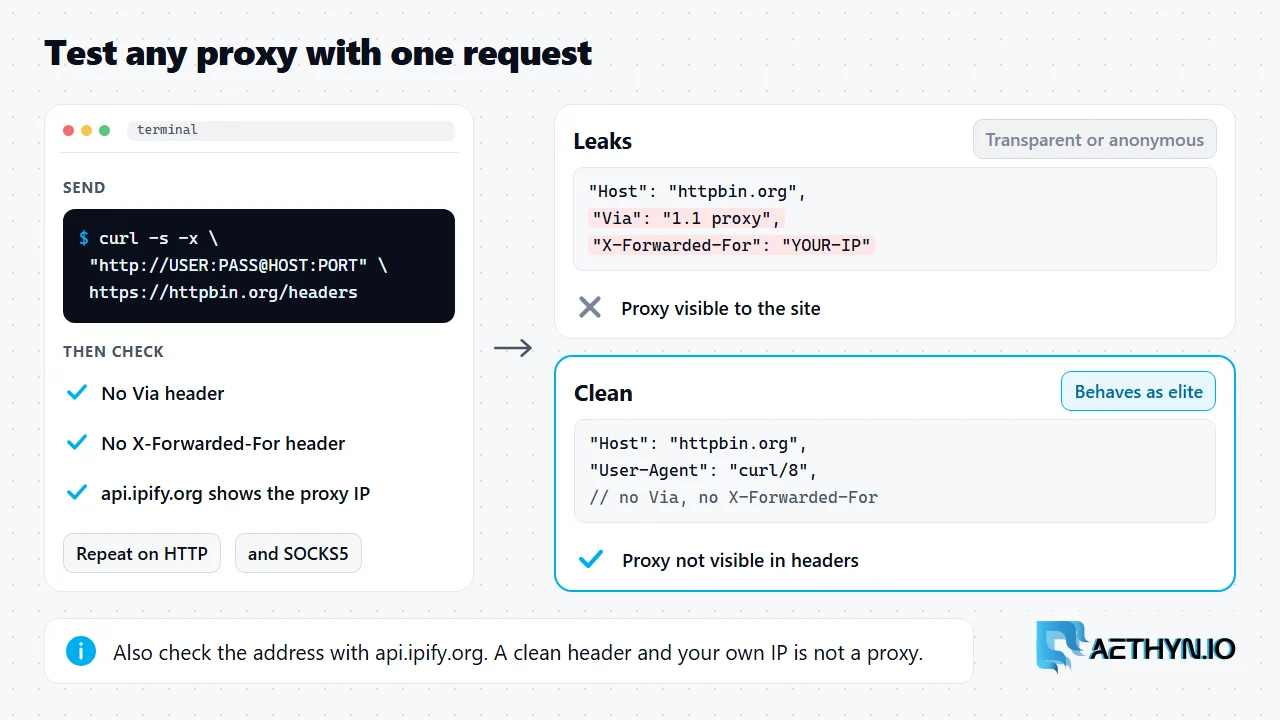
Do not trust the label a list or a vendor gives. Send a request through the proxy to a service that echoes your headers and read what comes back:
Code Snippetcurl -s -x "http://USER:PASS@HOST:PORT" https://httpbin.org/headers
Read the JSON. A Via or X-Forwarded-For entry means the proxy is transparent or anonymous. If X-Forwarded-For holds your own IP, it is transparent. If neither appears, the proxy behaves as elite for that request. Then run curl -s -x ... https://api.ipify.org and confirm the address is not yours. Run both checks on every proxy you consider, because behaviour can differ between HTTP and SOCKS5.
Header anonymity is not the whole story
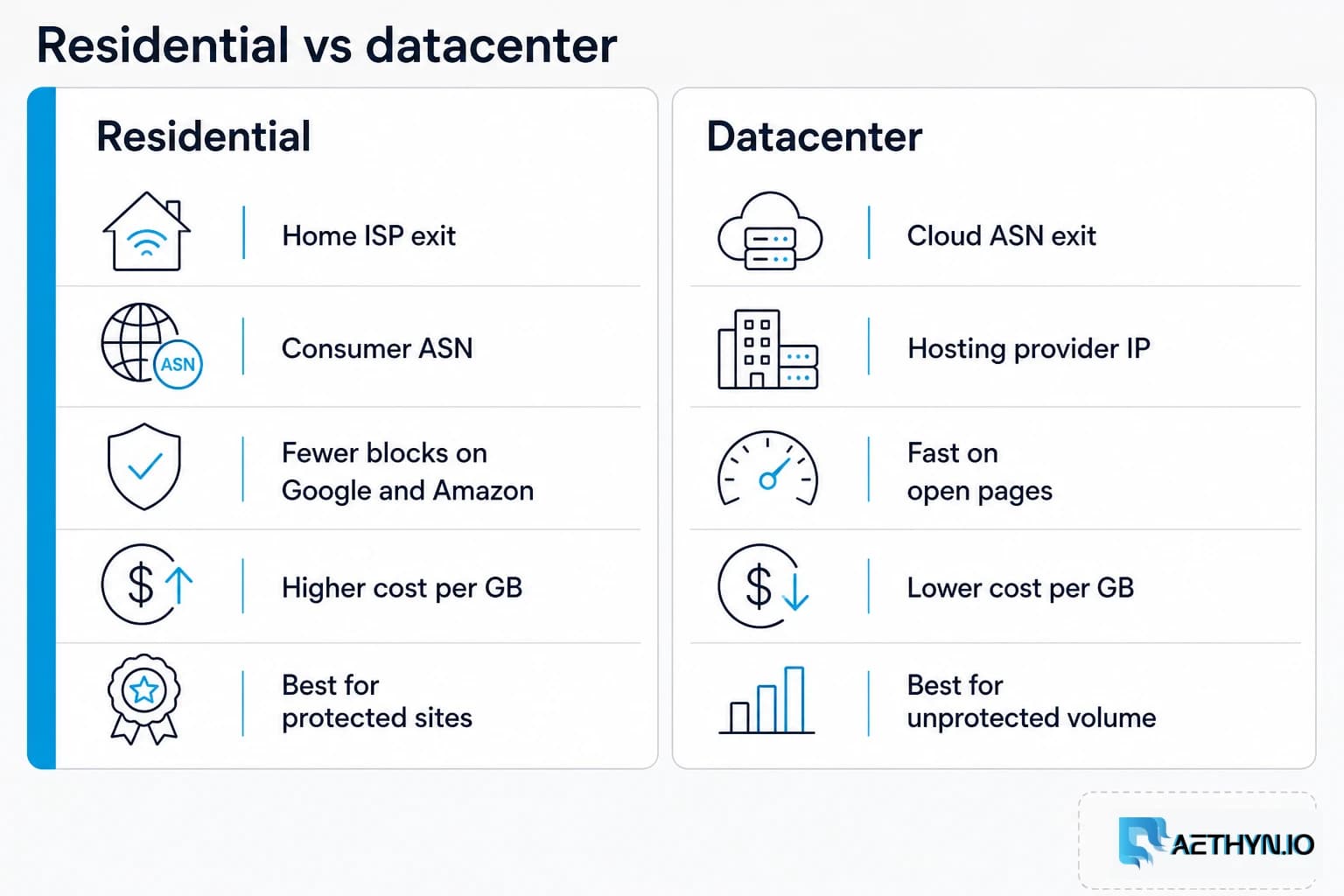
High anonymity answers one question: does this proxy leak? It does not answer whether a target will accept the request. Sites also score the IP itself (is the ASN residential or a data center, is the reputation clean), the TLS handshake, cookies and behaviour. A free elite proxy on a data-center ASN can pass the header test and still be blocked on the first page, which is the difference covered in residential vs datacenter proxies. Header anonymity is necessary for hard targets. It is not enough.
Where Aethyn Elite fits
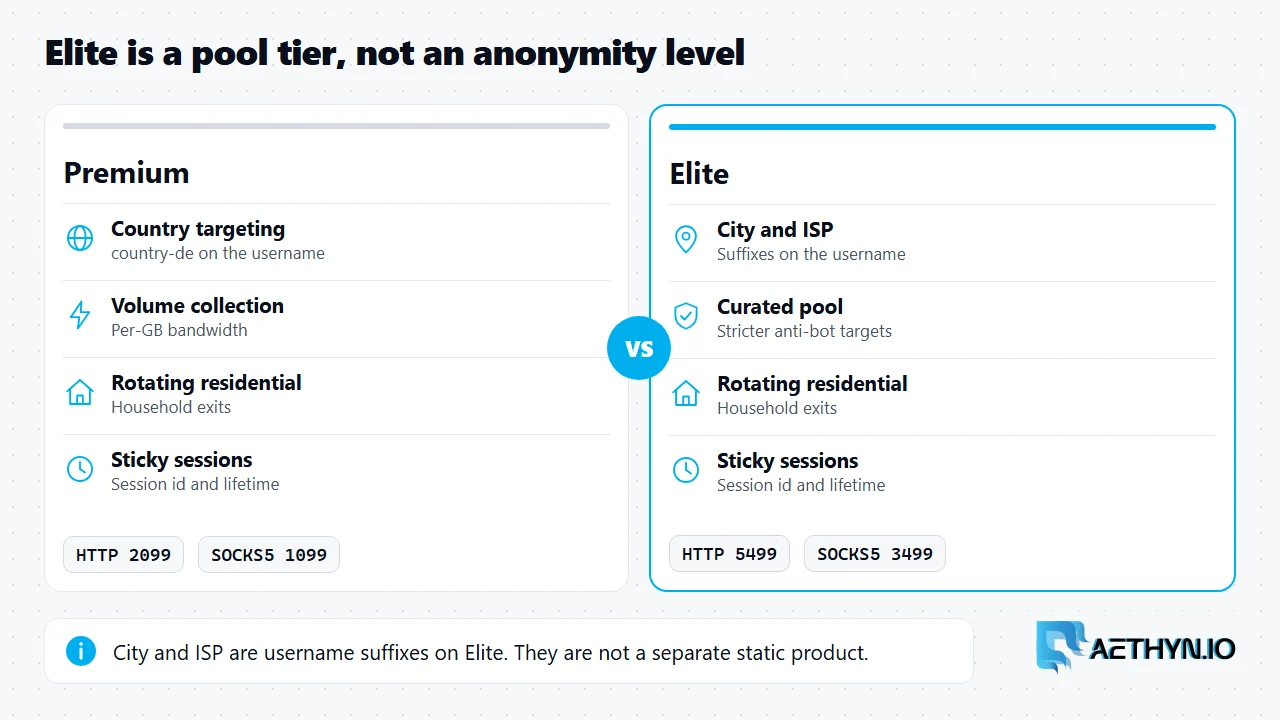
Aethyn Elite is a pool tier, not an anonymity level. It is a curated pool of residential IPs, with city and ISP targeting as username suffixes, built for targets with stricter anti-bot screening such as Cloudflare, Akamai and PerimeterX. Elite HTTP is port 5499 and Elite SOCKS5 is 3499 on proxy.aethyn.io:
Code Snippetaethyn-XXXXX-country-de-city-berlin:PASSWORD@proxy.aethyn.io:5499
Because the exits are household IPs, they pass the ASN check that data-center proxies fail. Run the header test above on the Elite port before you rely on it, the same way you would for any provider. If your targets are not that strict, Premium residential is cheaper per GB and rotates the same way, as explained in how rotating residential proxies work. For the harder cases, see Elite residential proxies and pricing, and start with the beginner guide if residential exits are new to you.
Elite proxy questions
What is an elite proxy?
What is the difference between anonymous and elite proxies?
Is Aethyn Elite the same as an elite proxy?
Does an elite proxy make me anonymous?
Guides, integrations & docs
Continue reading
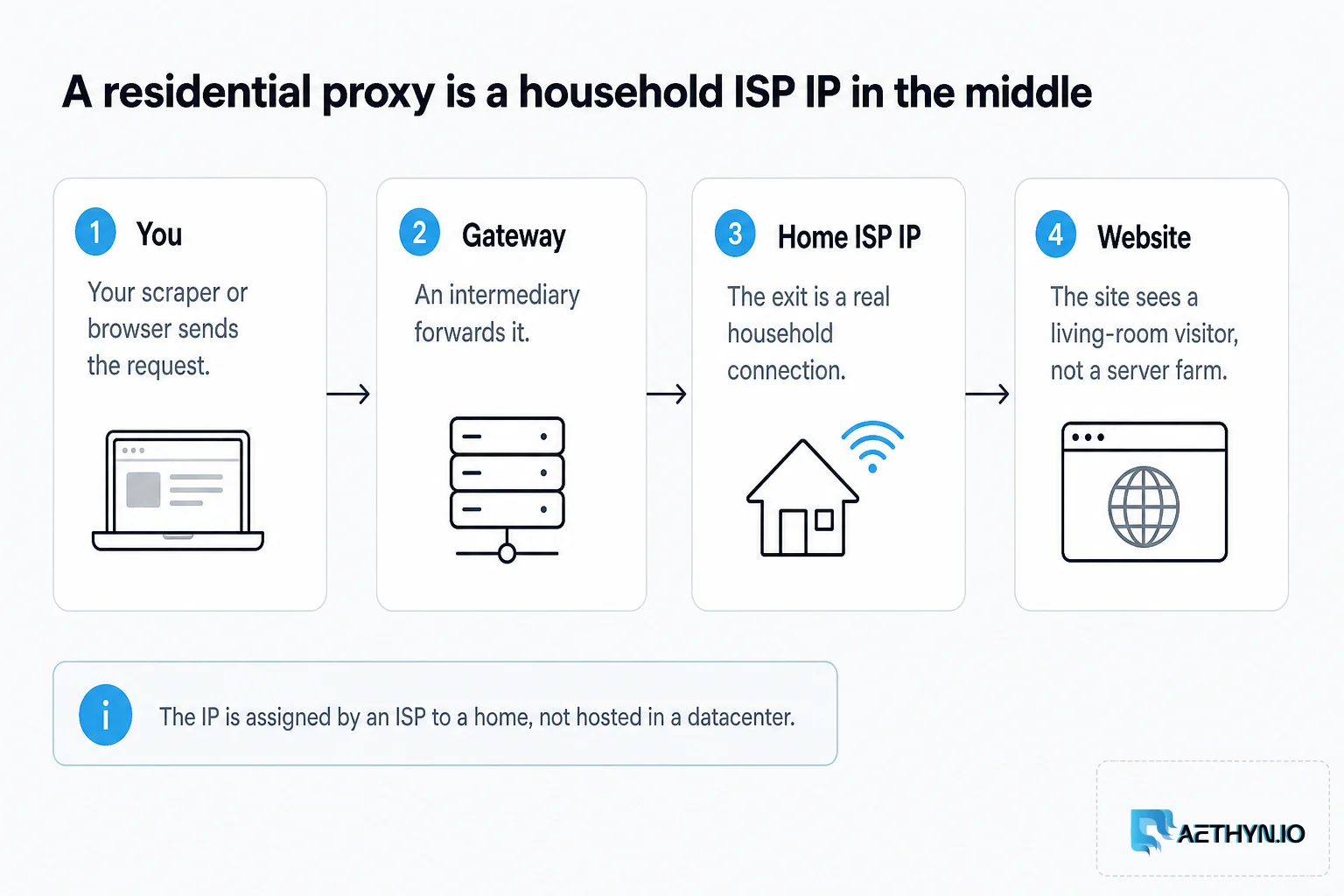
What Is a Residential Proxy? Complete Beginner Guide (2026)
Learn everything about residential proxies: how they work, why they are more reliable than datacenter IPs, and how to use them for your business in 2026.
Proxy vs VPN: Which One Changes the Address (2026)
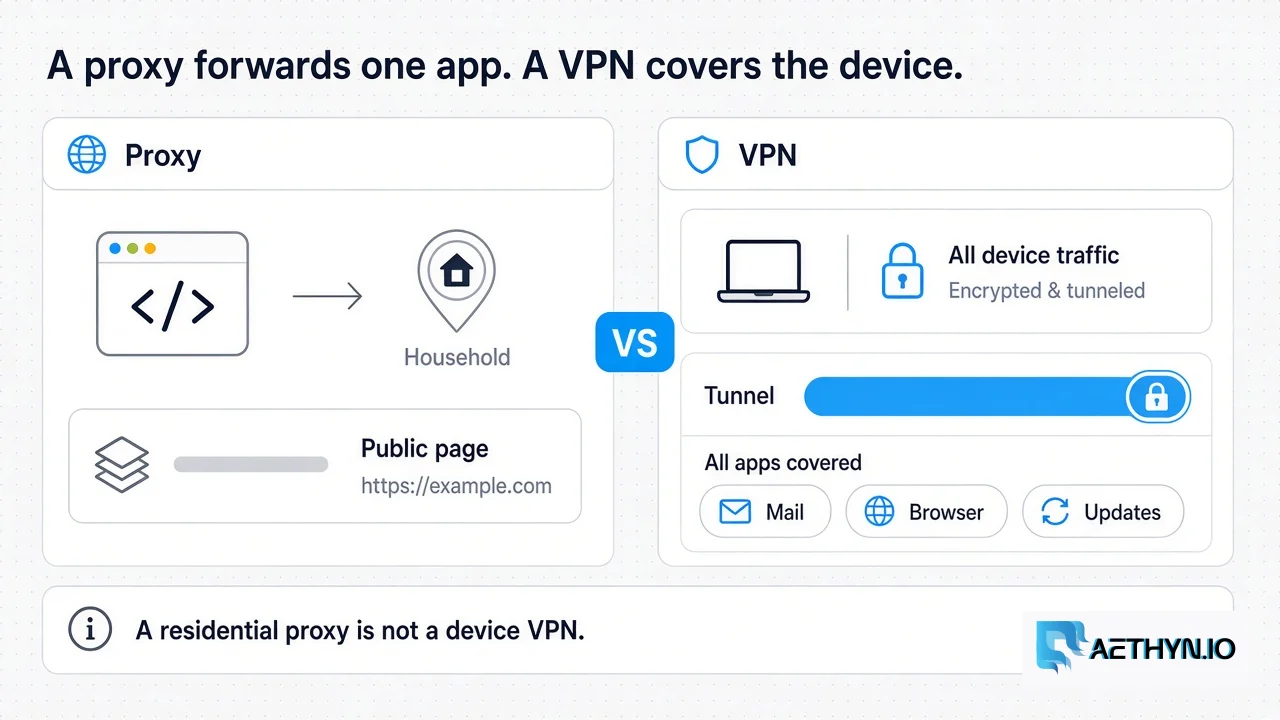
A proxy forwards the requests you point at it. A VPN tunnels the whole device. A residential proxy is the first job, and Aethyn does not sell a VPN.
Residential vs Datacenter Proxies: Which One Should You Use?
A residential proxy is an ISP-assigned household IP; a datacenter proxy is a cloud-hosted server IP. Compare trust, speed, cost, and when to switch — Aethyn sells residential only.
A curated residential pool for hard targets
Elite HTTP is port 5499, SOCKS5 is 3499. City and ISP on the username. Free trial, no card.