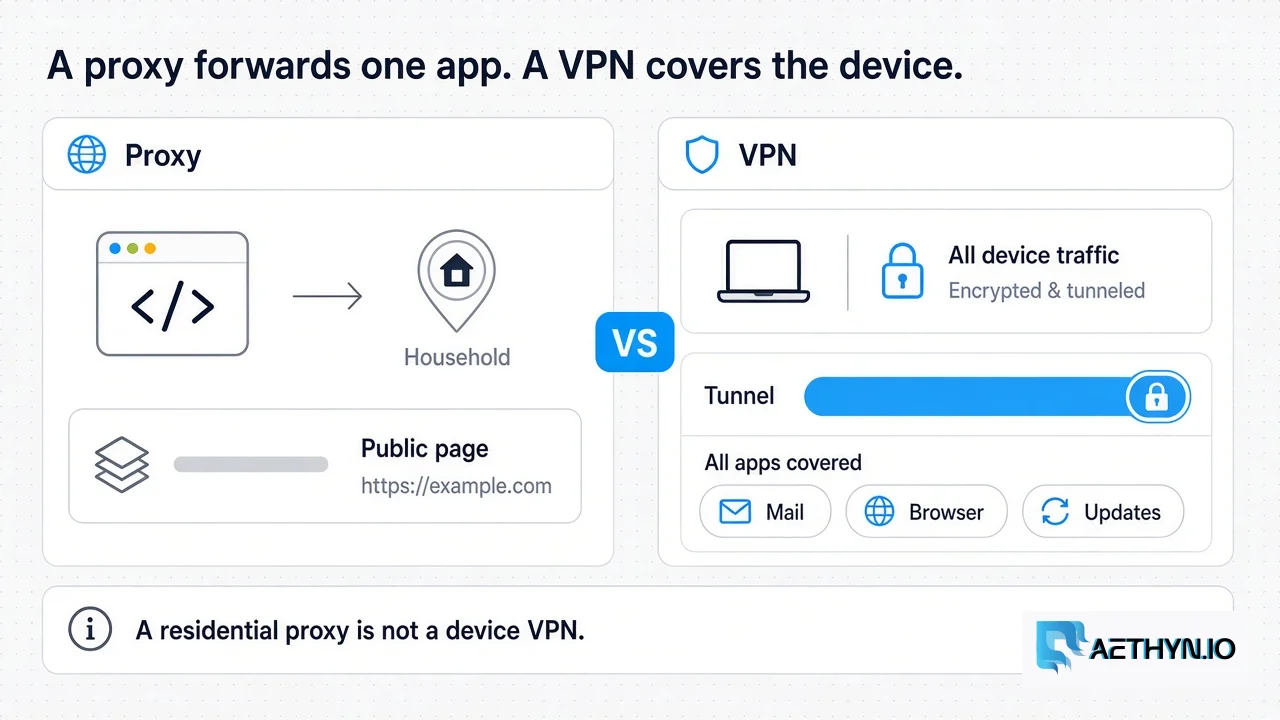
A proxy is an intermediary for one client. A VPN is a tunnel for the whole device. A residential proxy sends the requests you point at it out through a household ISP address, so the site sees that household instead of the machine that sent the request. A VPN encrypts traffic from the device to a VPN server, and the sites opened through the tunnel see the VPN server’s address. Both change which address a destination observes. They do not do the same job, and neither replaces the other.
Aethyn is the proxy. The gateway is proxy.aethyn.io, over HTTP and SOCKS5, on residential addresses only. There is no VPN client in the product, and this page does not describe one. If the job is a household address on a script or on one browser, use the proxy and the beginner guide. If the job is every app on a laptop encrypted through one tunnel on a shared network, that is a VPN, bought from a VPN provider.
What each one changes
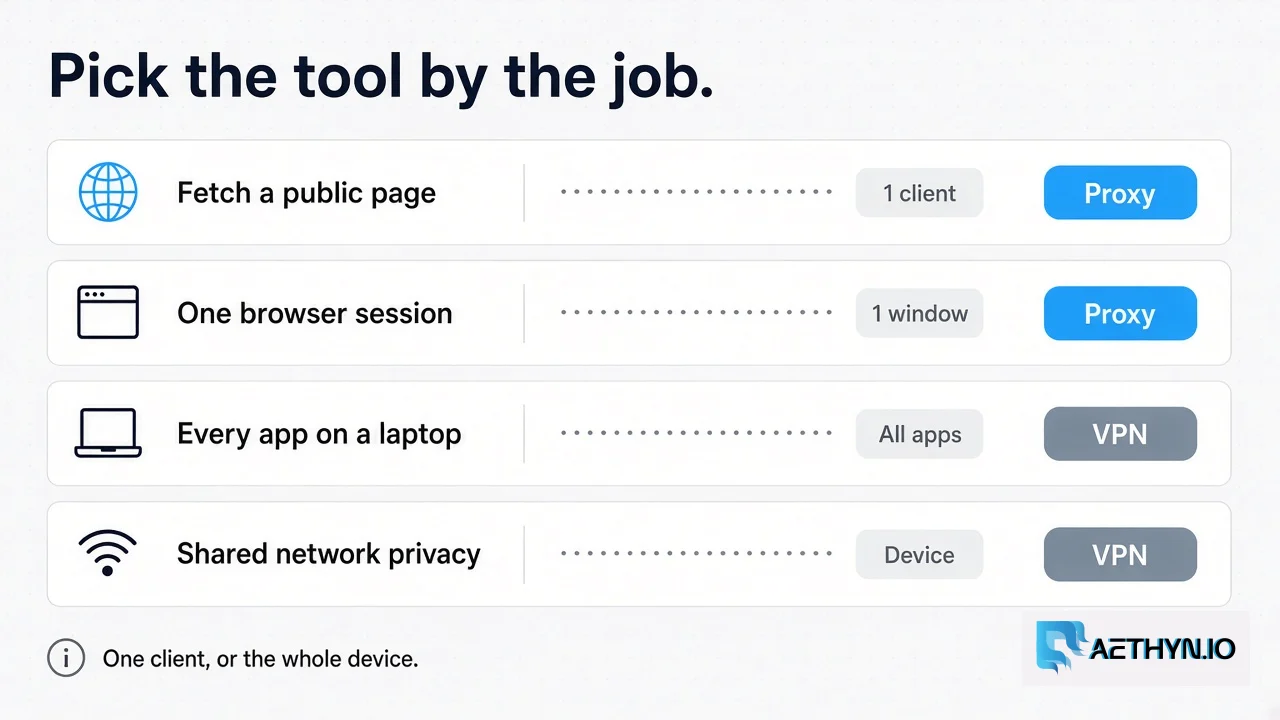
A proxy sits on the path of the clients you configure. A Python process, curl, or a browser launched with a proxy host sends its web requests to the gateway. The gateway opens the onward connection from a residential exit. The site logs that exit. Your mail app, your operating-system updates, and a second browser you did not configure keep using your own address. Scope is the client, not the device.
A VPN sits on the device. After it connects, the traffic you chose to tunnel — often everything — goes to the VPN server first, and the sites at the far end see that server. The local network sees a tunnel to the VPN provider rather than each site name in the clear. That is the usual reason people turn a VPN on at a café. It is a different reason from “this public page should see a household address in Germany.”
HTTPS still ends at the website in both setups. An HTTP proxy uses CONNECT to open that encrypted tunnel and does not read the page body. A VPN encrypts a second hop, between you and the VPN server, before the site’s own HTTPS begins. Encryption of the laptop is the VPN’s job. Choosing the exit address of one scrape is the proxy’s job. Protocol choice on the proxy, HTTP or SOCKS5, is a separate question and lives in the SOCKS5 and HTTP comparison.
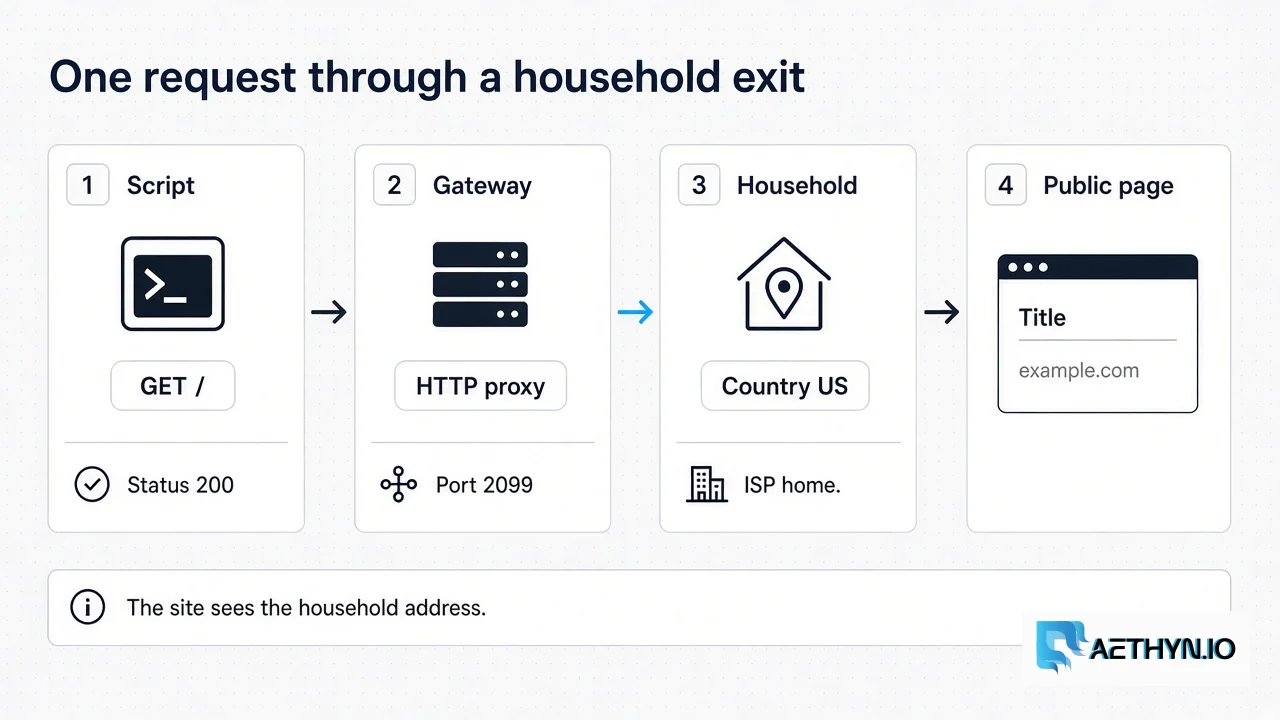
Which job is which
| Job | Use |
|---|---|
| Read a public page from a household address in a chosen country | Residential proxy |
| Keep one browser or one script on that address | Residential proxy |
| Encrypt every app on a laptop on a shared network | VPN |
| Stop the local network from seeing each site the device opens | VPN |
A proxy can also rotate. With no session id, each Aethyn request can leave from a new household. With -session- and -lifetime- on the username, the same exit is held for that many minutes (default 30, up to 1440). A VPN holds its tunnel until you disconnect. Holding one address versus a new address each time is rotating versus a sticky session, and it is still a proxy question, not a VPN question.
What you configure
Point the client at proxy.aethyn.io. Premium HTTP is port 2099 and takes a country on the username. Elite HTTP is port 5499 and adds city and ISP. The password is the secret from the dashboard. Nothing in that setup installs a tunnel driver or routes the rest of the computer. When the page you are reading is a public document and you need the fields in it, the scraping explainer is the next page. When the login is refused, the status is 407, and that article is separate from this comparison.
Proxy and VPN questions
Is a residential proxy a VPN?
Which one hides my address from a website?
Do I need a VPN to use Aethyn?
Does a proxy encrypt my whole laptop?
Guides, integrations & docs
Continue reading
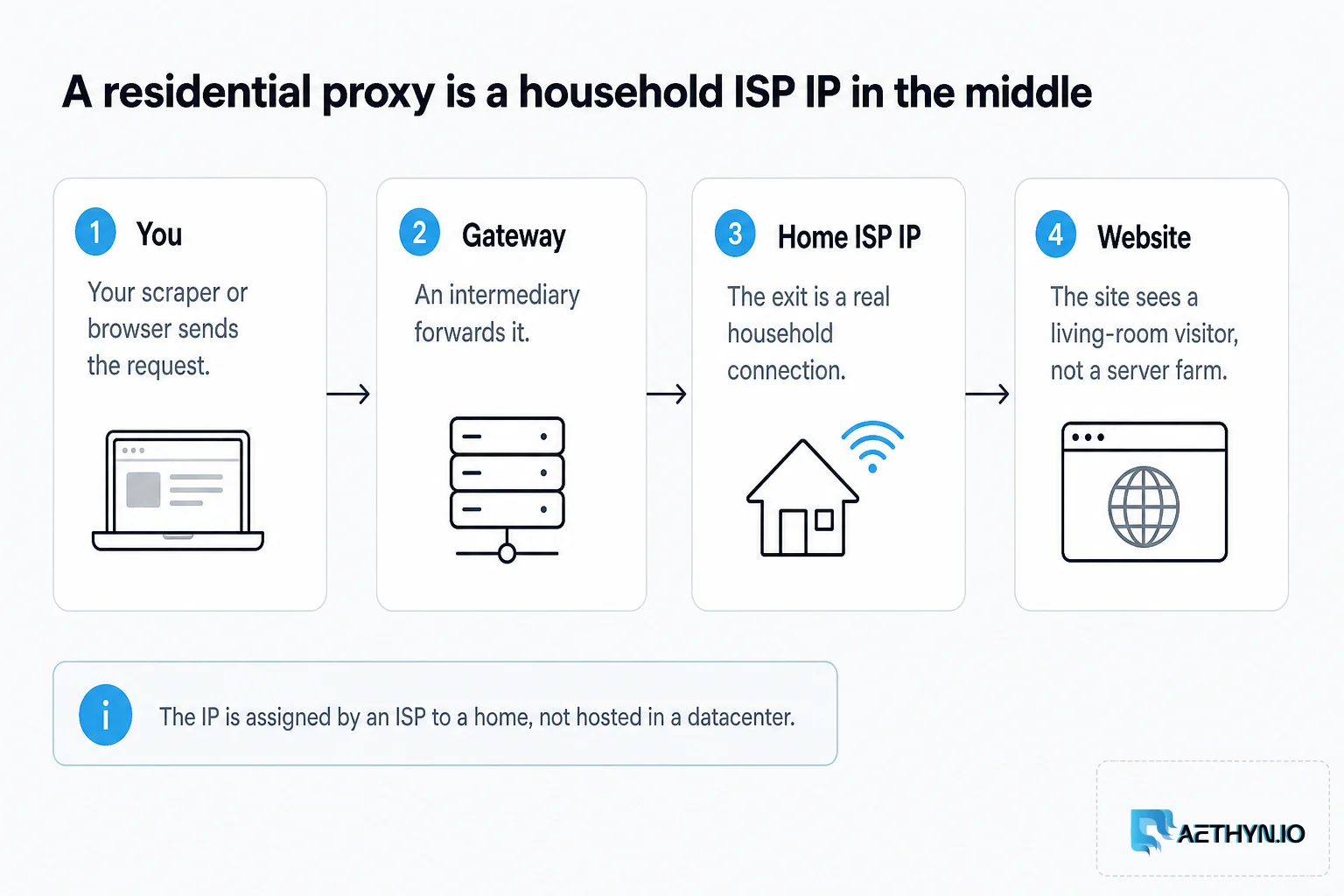
What Is a Residential Proxy? Complete Beginner Guide (2026)
Learn everything about residential proxies: how they work, why they are more reliable than datacenter IPs, and how to use them for your business in 2026.
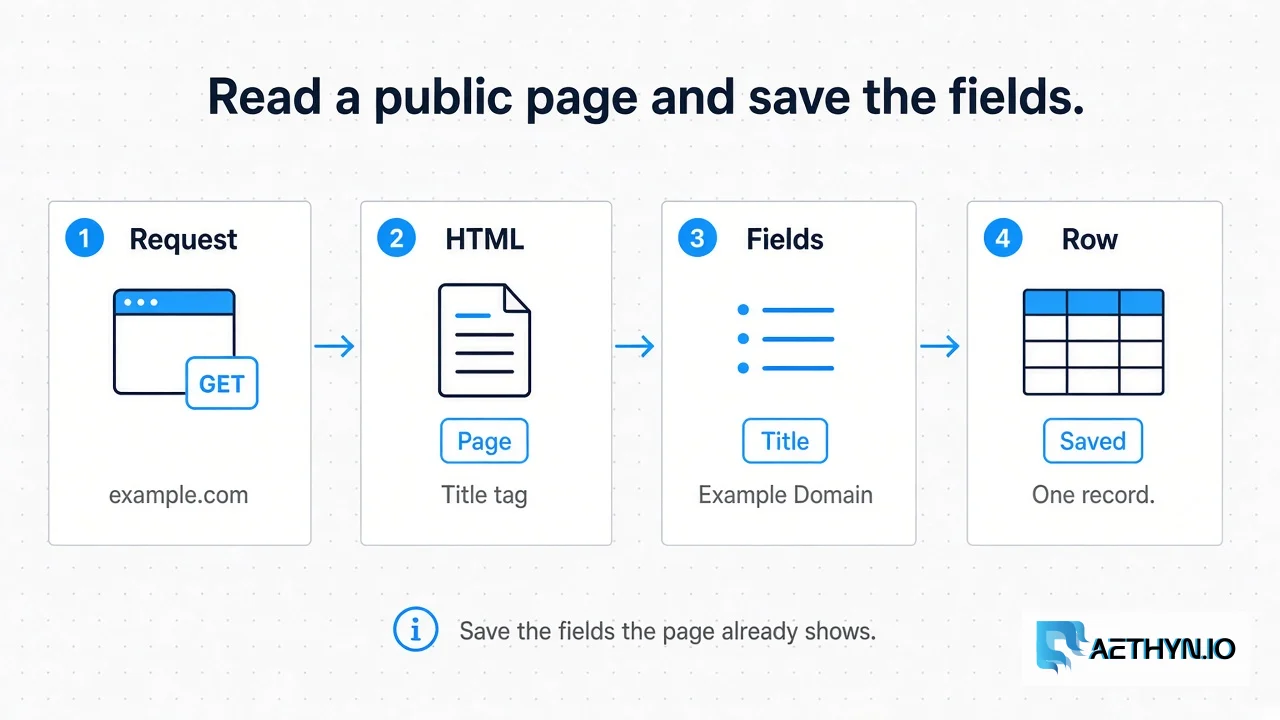
What Is Web Scraping? (2026)
Web scraping is reading a public page and saving the fields you need. The request, the parser, and a residential exit are three separate steps.
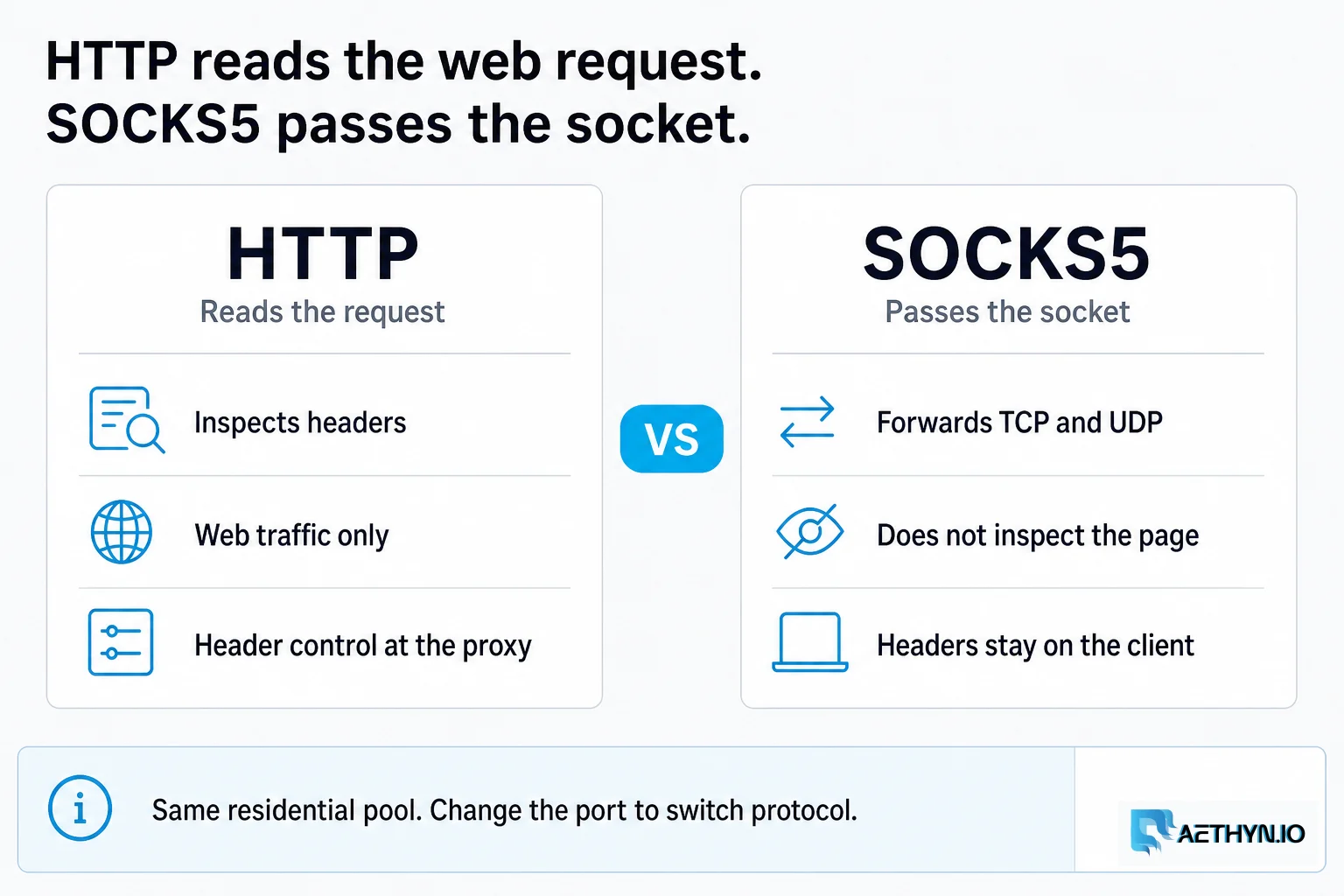
SOCKS5 vs HTTP Proxies: Which is Better for Web Scraping?
Understand the fundamental differences between SOCKS5 and HTTP protocols and which one provides better performance for your automation.
A household exit for the requests you choose
Premium HTTP is port 2099. Elite HTTP is port 5499. Country on the username. Free trial, no card.