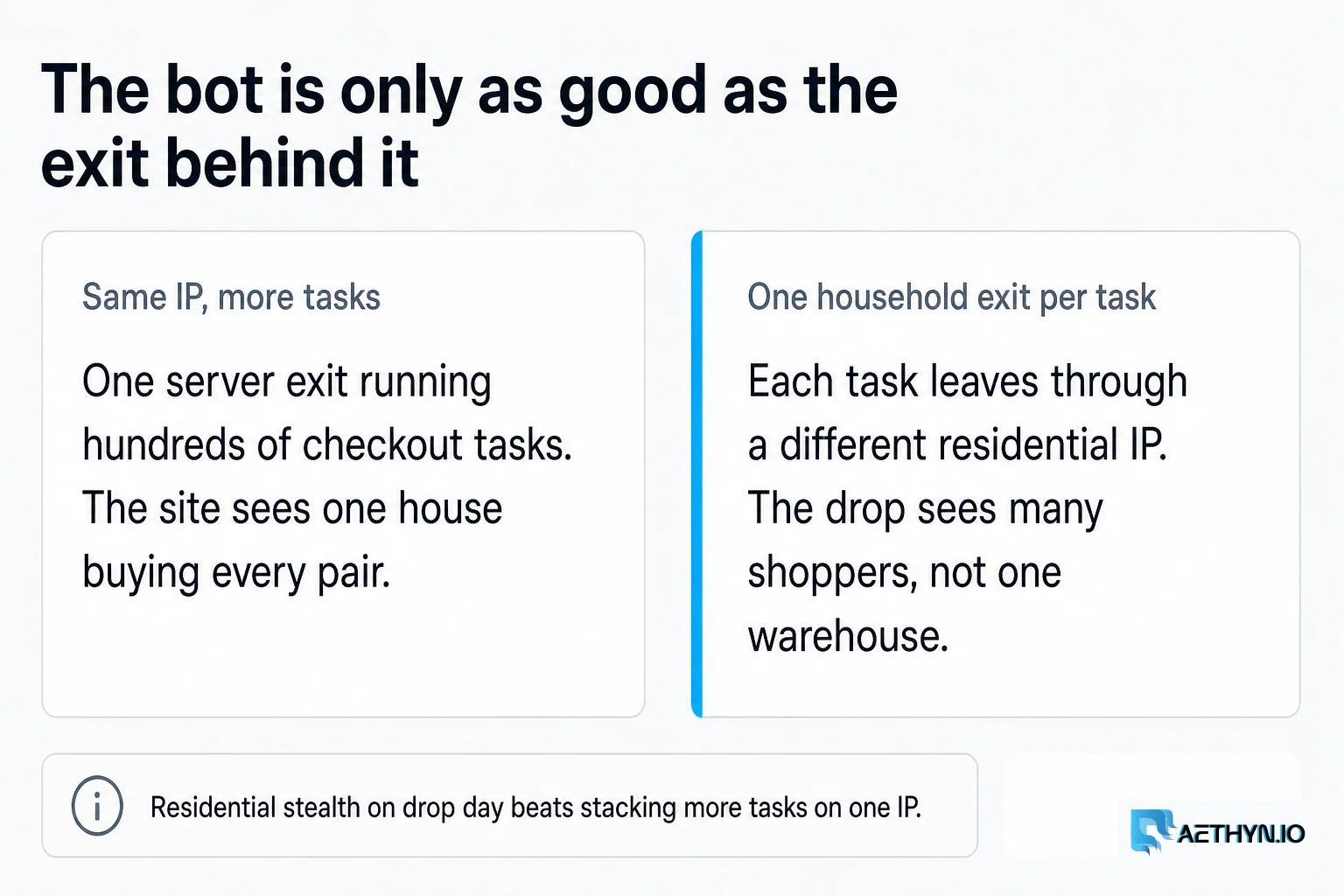
If you've ever tried to buy a limited-edition pair of sneakers on drop day, you know that the "human" way is nearly impossible. Between site crashes and bots cleaning out the stock in milliseconds, your only chance is to join the automation game.
But a bot is only as good as the proxies behind it.
The Sneaker Drop Challenge
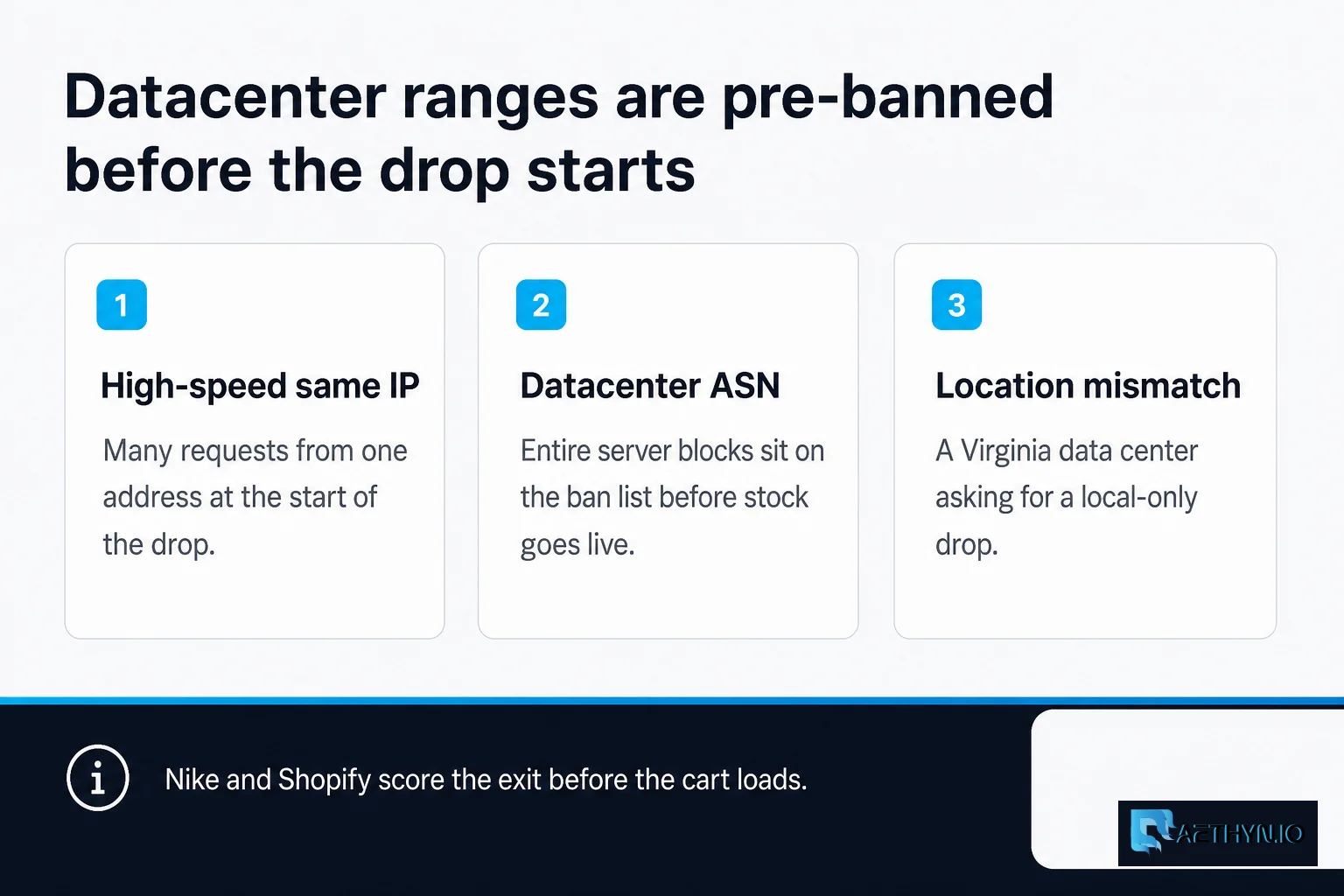
Sites like Nike, Shopify, and Yeezy Supply have some of the most aggressive bot protection in the world. They look for:
- High-Speed Requests: Multiple requests from the same IP at the start of a drop.
- Datacenter Ranges: Entire blocks of server IPs are pre-emptively banned.
- Location Mismatch: Requests from a Virginia data center for a local-only drop.
Why Residential Proxies are Mandatory
For sneaker drops, speed + stealth = success.
1. Bypassing "One Per Customer"
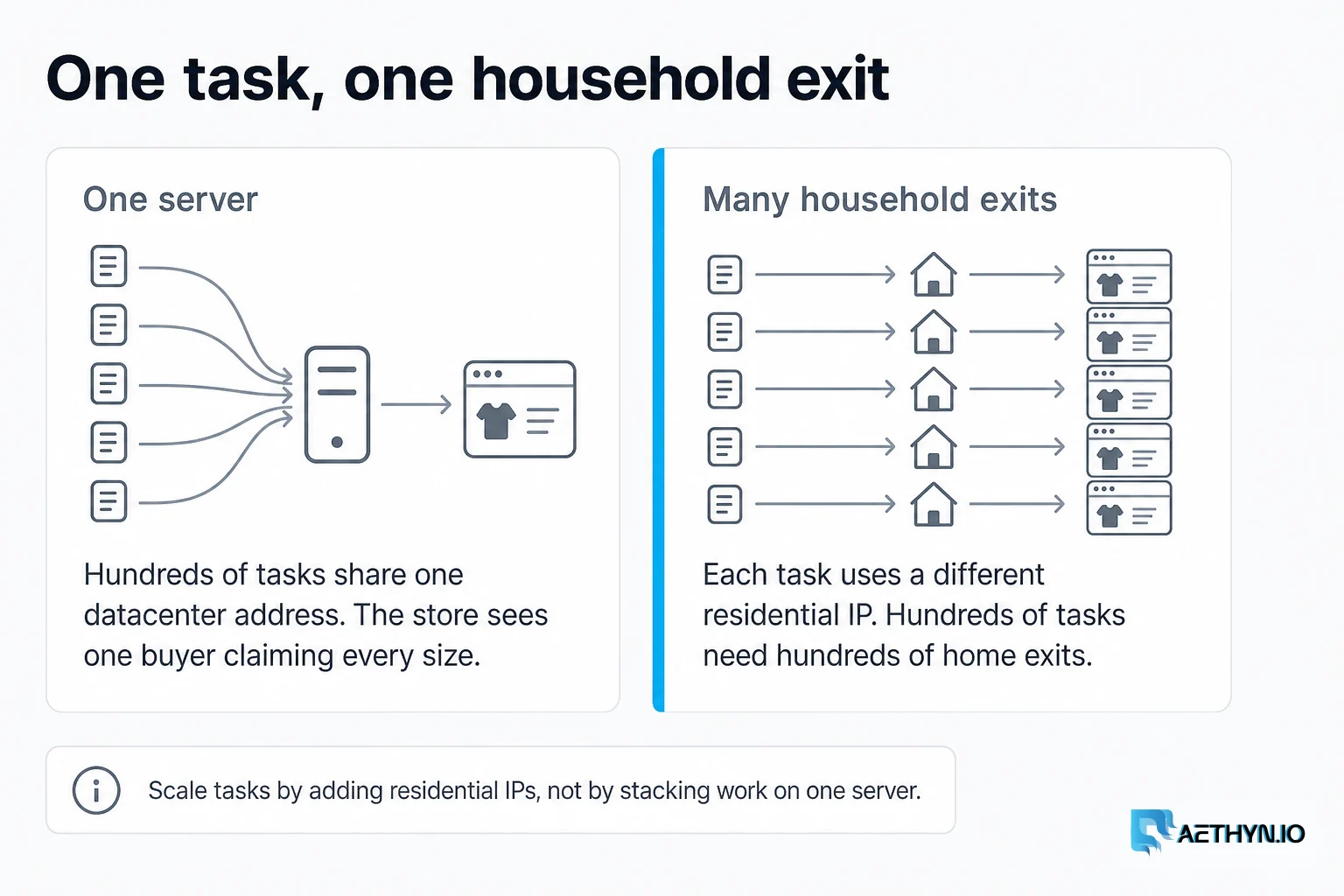
Most drops are limited to one pair per person. Residential proxies allow you to run hundreds of "tasks" on your bot, each appearing to come from a different home address.
2. Rotating vs. Sticky on One Residential Pool
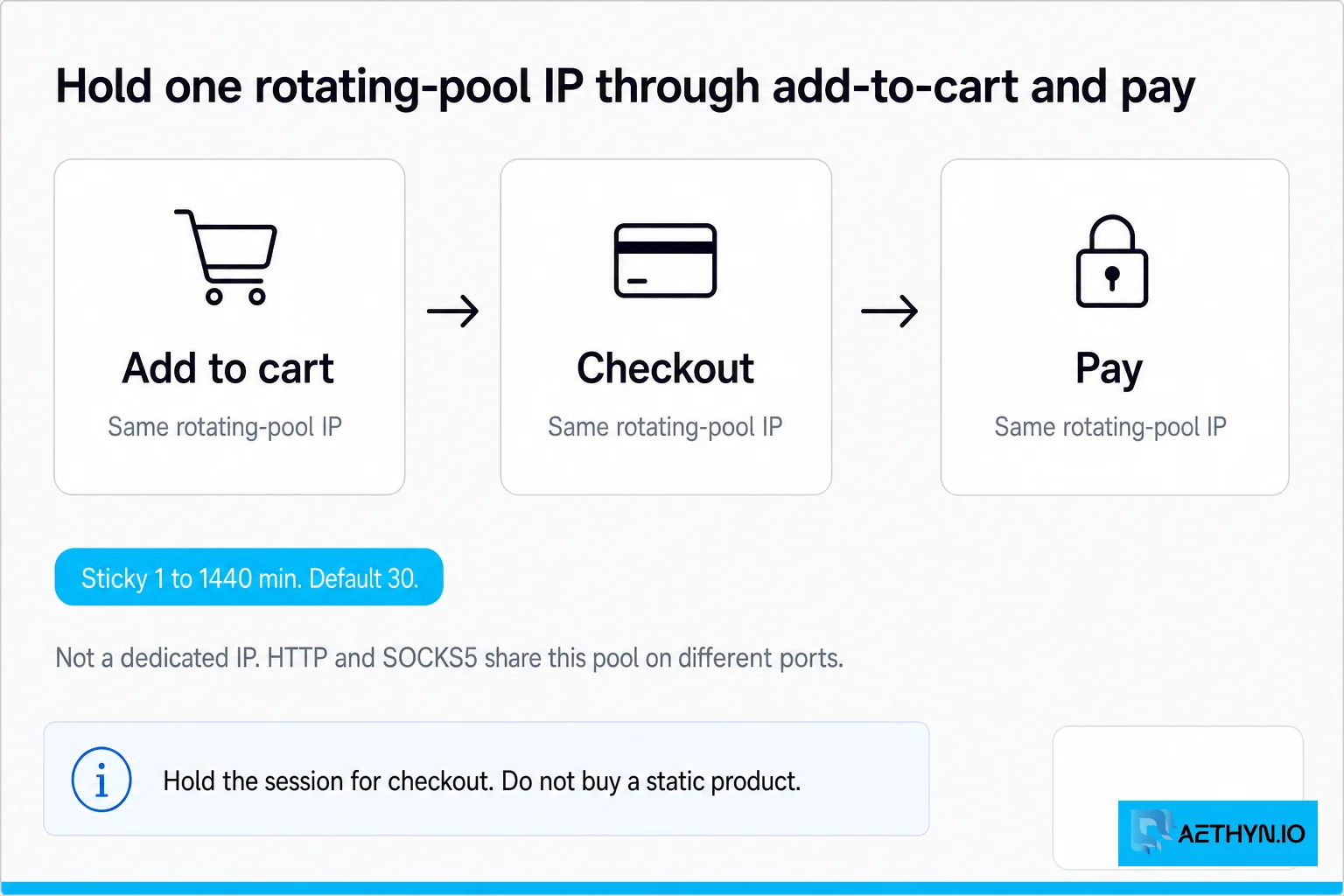
Checkout is a multi-step flow (add to cart → pay). A new IP mid-checkout looks like a stolen session. Sticky holds one rotating-pool IP for 1–1440 minutes (default 30) so the identity stays the same household through payment. It is not a dedicated IP, and there is no ISP or static SKU.
- Rotating: A new residential IP per request. Use it to spread browse and queue volume.
- Sticky: Same rotating-pool IP for the checkout window. Default 30 minutes; extend up to 1440 if the flow is slow.
SOCKS5 and HTTP are the same pool on a different port — pick the protocol your bot already speaks. Premium is country and volume. Elite adds city and ISP username suffixes and harder anti-bot reputation — sneaker sites are Elite territory.
[!TIP] Sneaker Tip: Point the bot at Elite residential. City and ISP are username suffixes on the same rotating pool, not a separate static product. HTTP and SOCKS5 share that pool.
Setting Up for the Drop
- Pre-generate your proxies: Don't wait until the drop starts.
- Test your IPs: Use a "proxy checker" to ensure they aren't pre-banned on the target site.
- Use a "Capture" solver: Ensure your proxies are high-quality enough to get "One-Click" CAPTCHAs.
Start Your Winning Streak
Aethyn's Elite pool is optimized for the world's most difficult sneaker sites.
Guides, integrations & docs
Continue reading
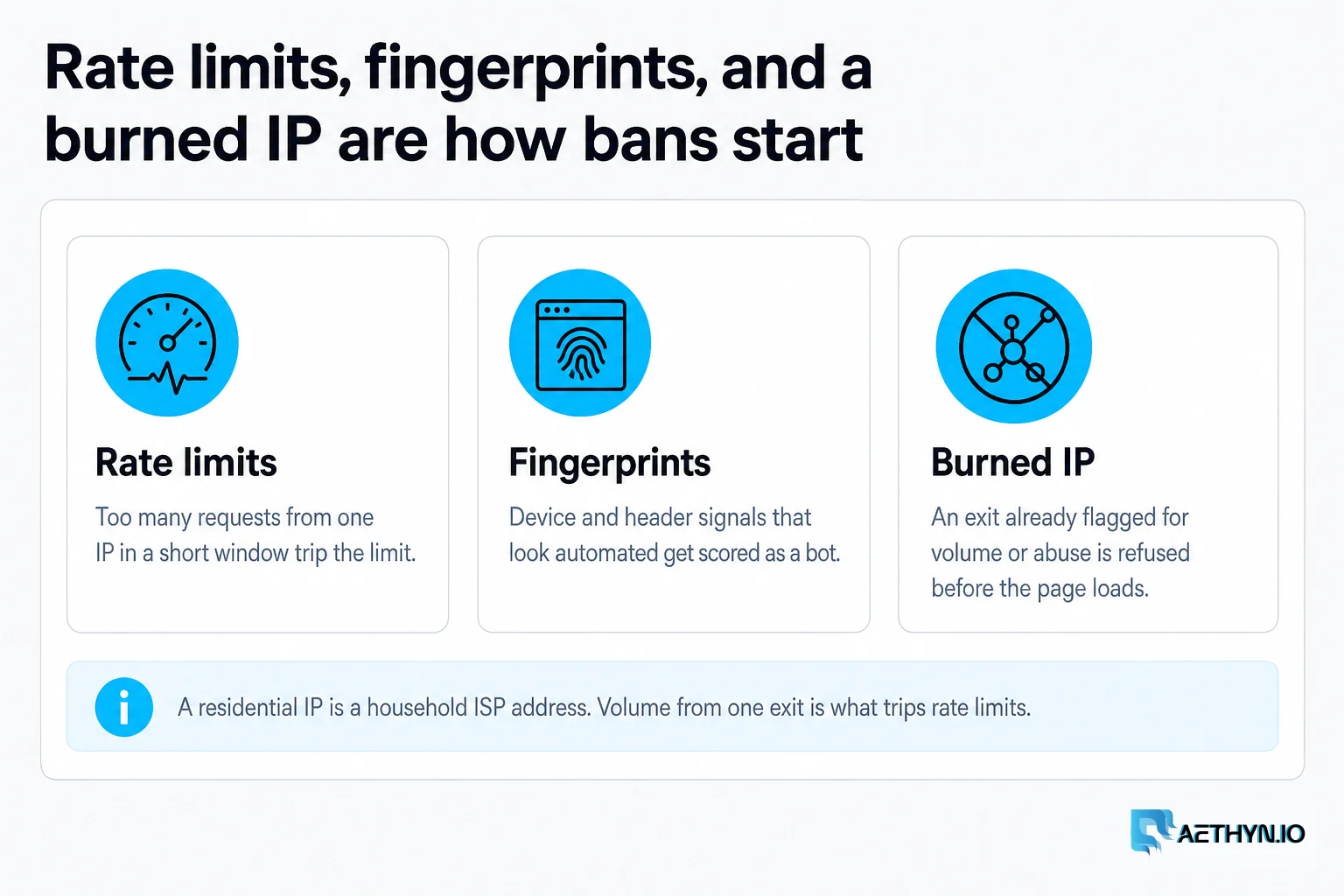
How to Avoid IP Bans Using Rotating Residential Proxies
IP bans are the enemy of automation. Learn the science of rotation and how to mimic human behavior to stay invisible on any website.
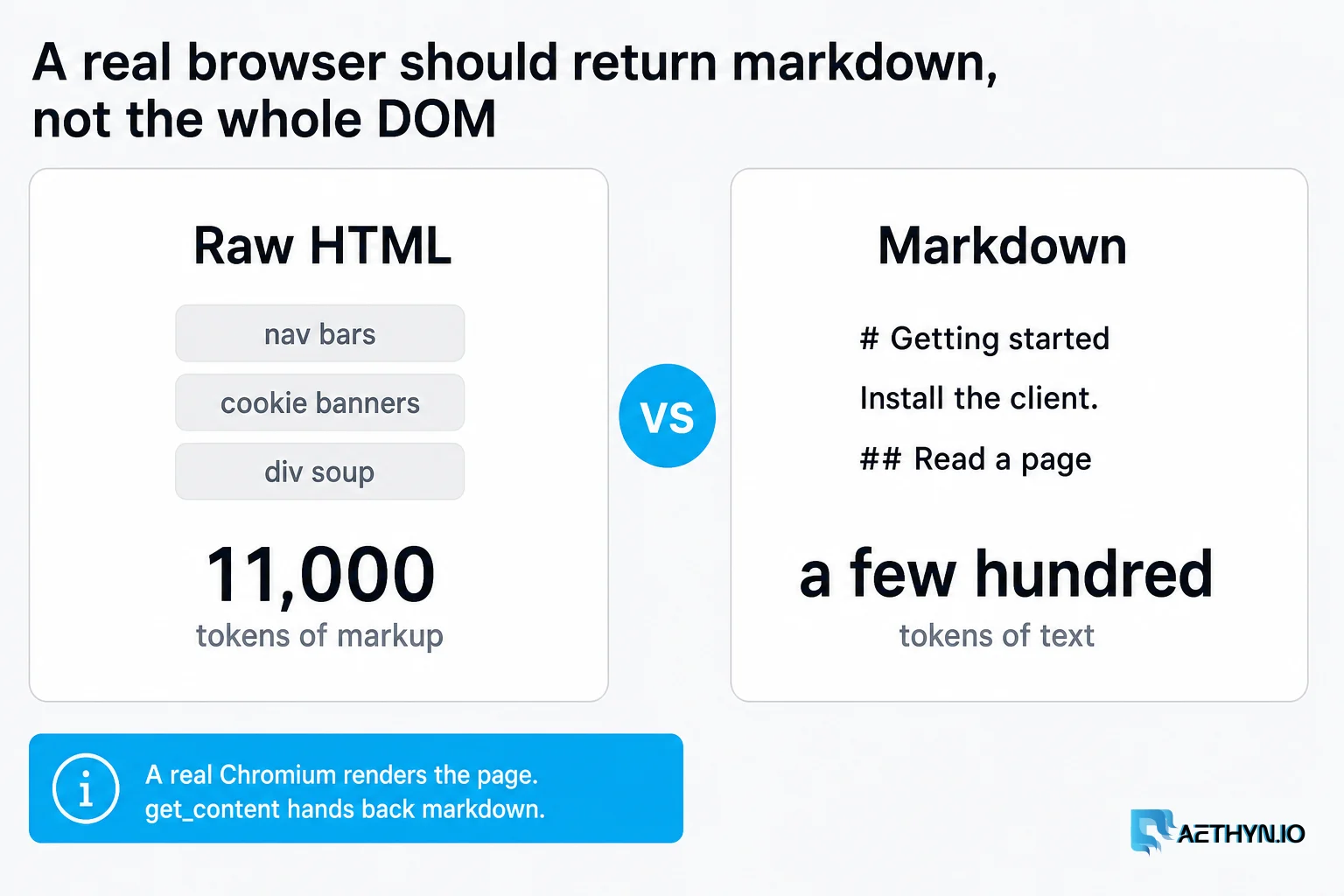
Give Your AI Agent a Real Browser (That Doesn't Eat Your Context Window)
Built-in fetch chokes on JavaScript sites and raw-HTML browser tools flood your context with DOM soup and screenshots. Here's an MCP that renders real pages, returns clean markdown, and routes through residential IPs — one npx command.
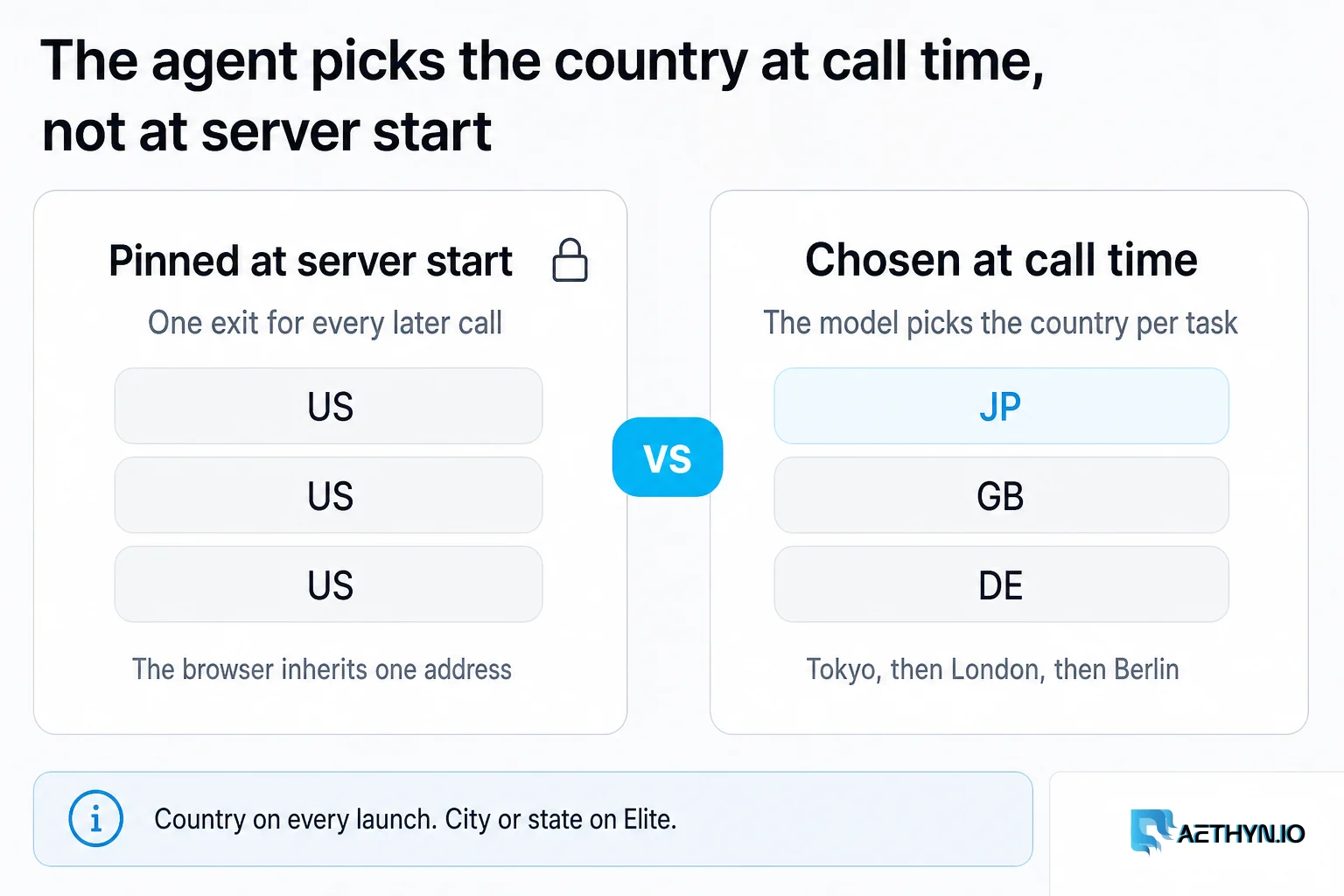
The Browser MCP Where the Agent Picks the Country
Most browser MCPs pin one exit at server startup or hide geo behind hosted infrastructure. Aethyn Browser MCP lets the AI agent choose the exit country and hold one sticky identity per task, at call time, then verify the exit actually landed before it trusts the page.
Premium or Elite residential proxies
Join developers scaling scraping and automation with Aethyn Premium and Elite pools from €2.00/GB.