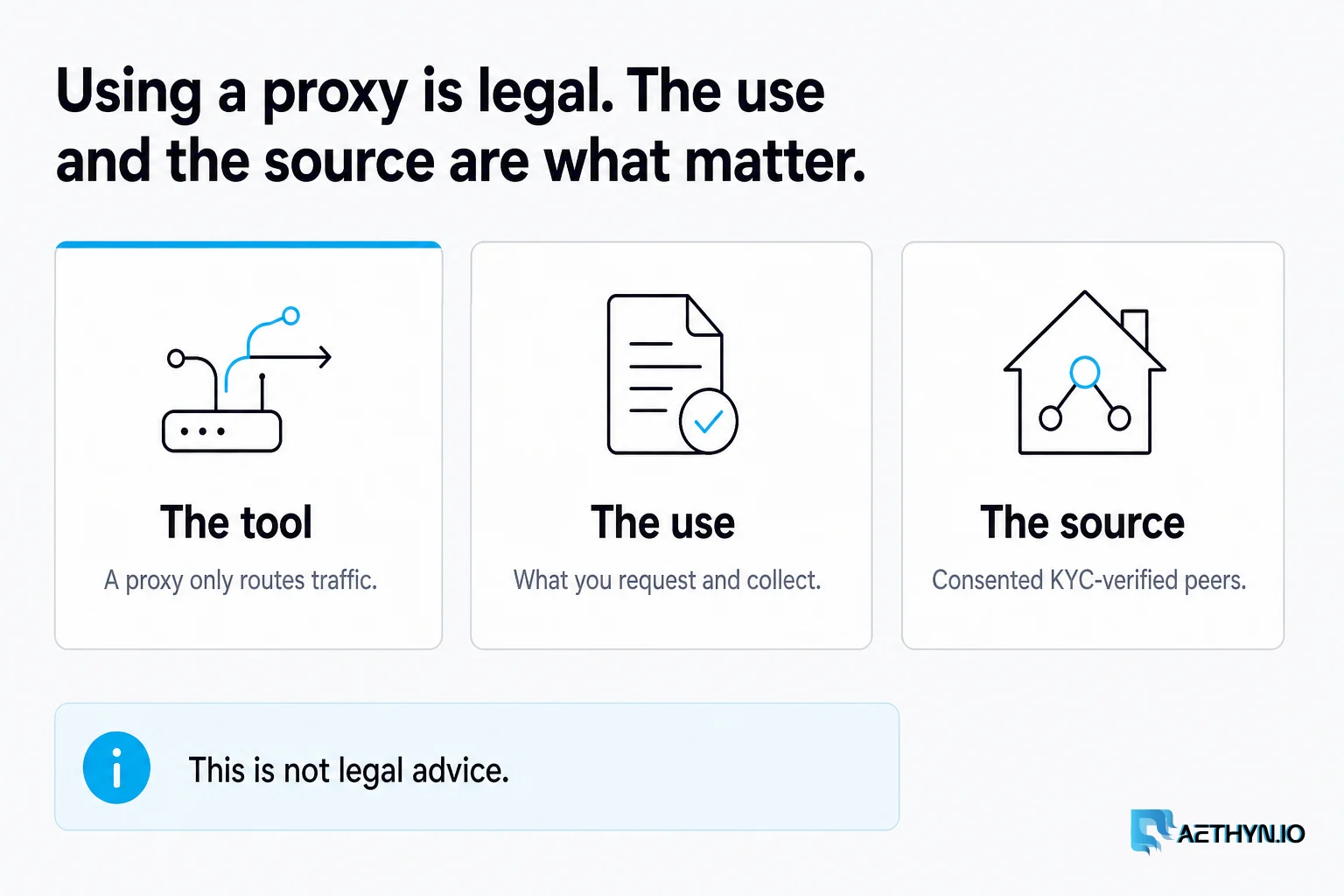
As the use of proxy networks grows, so do the questions about their legality and ethics. If you're using residential proxies for your business, it's vital to understand the legal landscape in 2026.
The Short Answer: Yes (With Conditions)
In almost all jurisdictions, including the US (under the Computer Fraud and Abuse Act) and the EU, using a proxy is entirely legal. Proxies are simply tools for routing traffic. However, how you use them and how they are sourced matters immensely.
1. Ethical Sourcing is Key
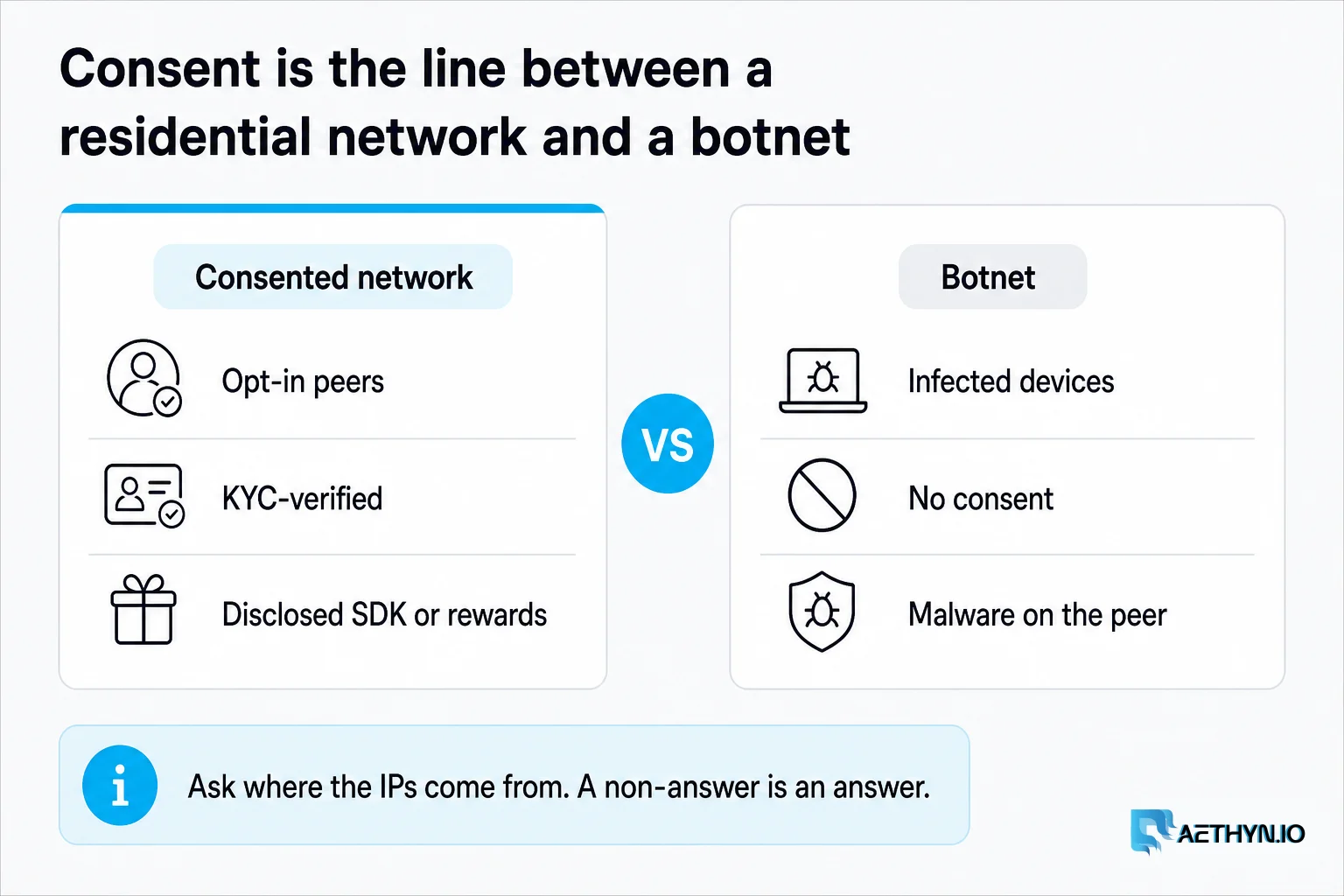
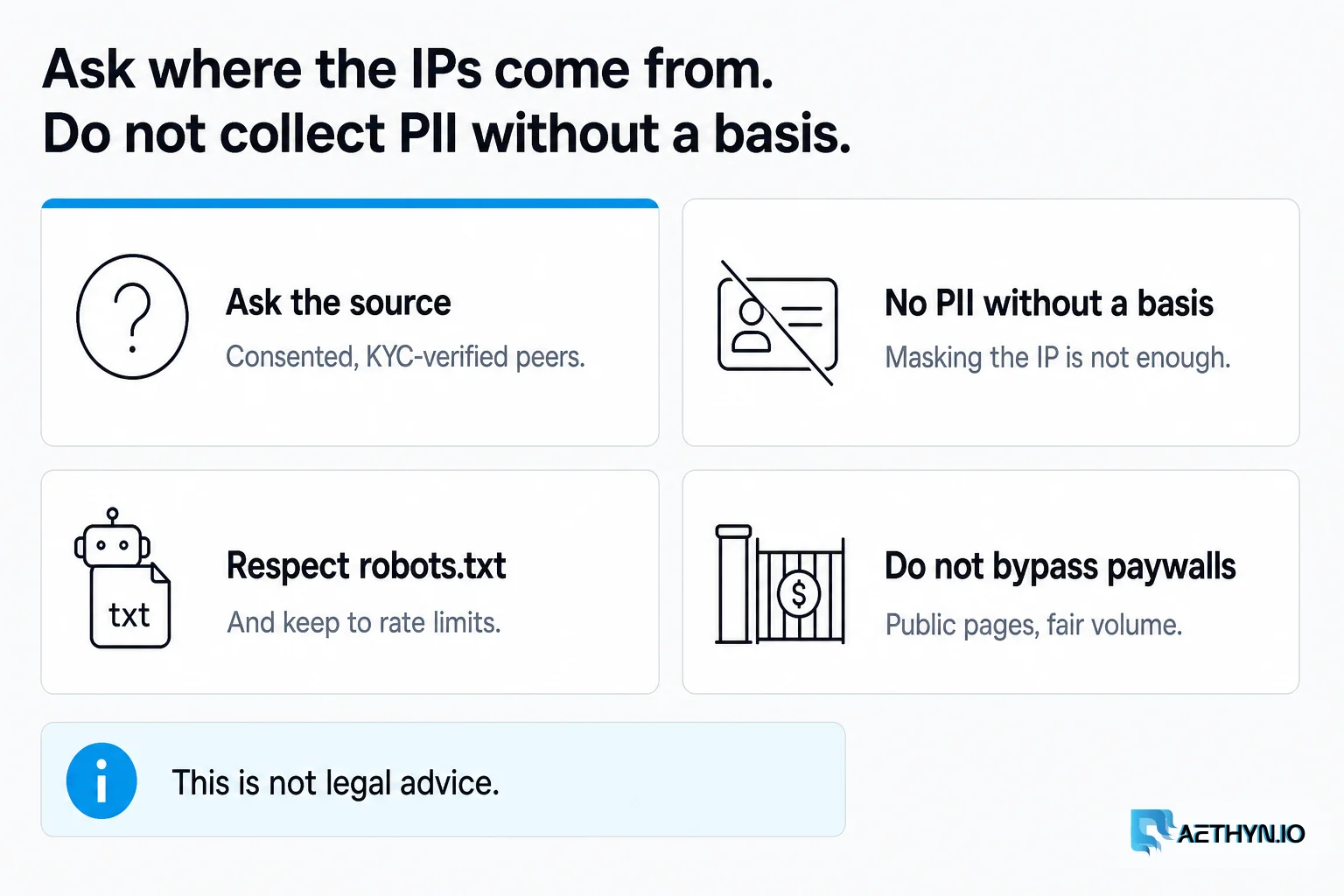
The biggest legal risk comes from using "botnet" proxies—networks built by infecting user devices with malware without their knowledge. At Aethyn, we prioritize ethical sourcing. Our IPs come from users who have explicitly opted into a proxy network in exchange for rewards or ad-free experiences. This ensures compliance with global privacy standards.
2. Compliance with TOS
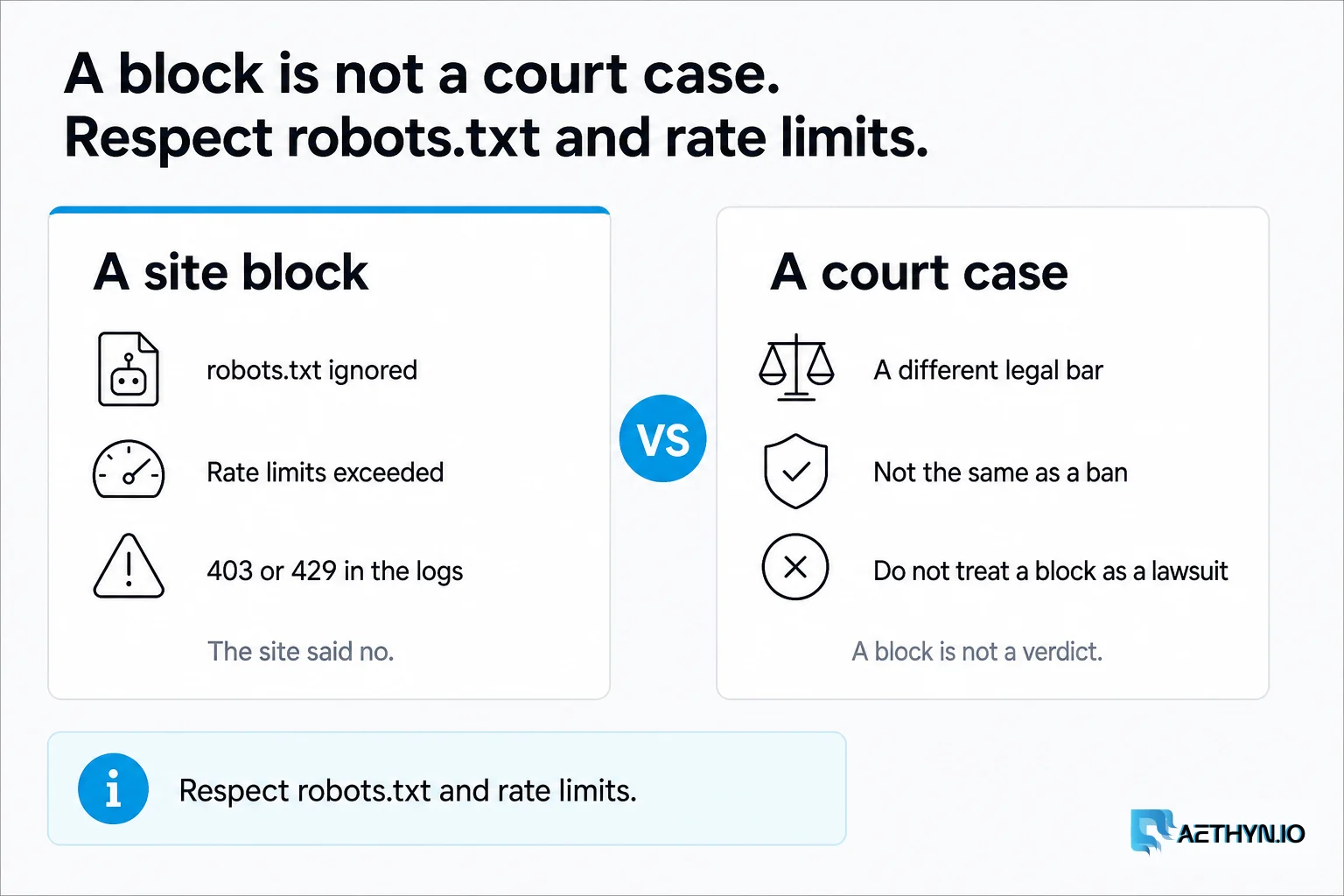
While using a proxy isn't illegal, it may violate a specific website's Terms of Service (TOS). Websites have the right to block traffic they deem automated or suspicious. For businesses, this is usually a matter of "cat and mouse" rather than a legal battle, but you should always respect robots.txt and rate limits where possible.
3. Data Privacy Laws (GDPR & CCPA)
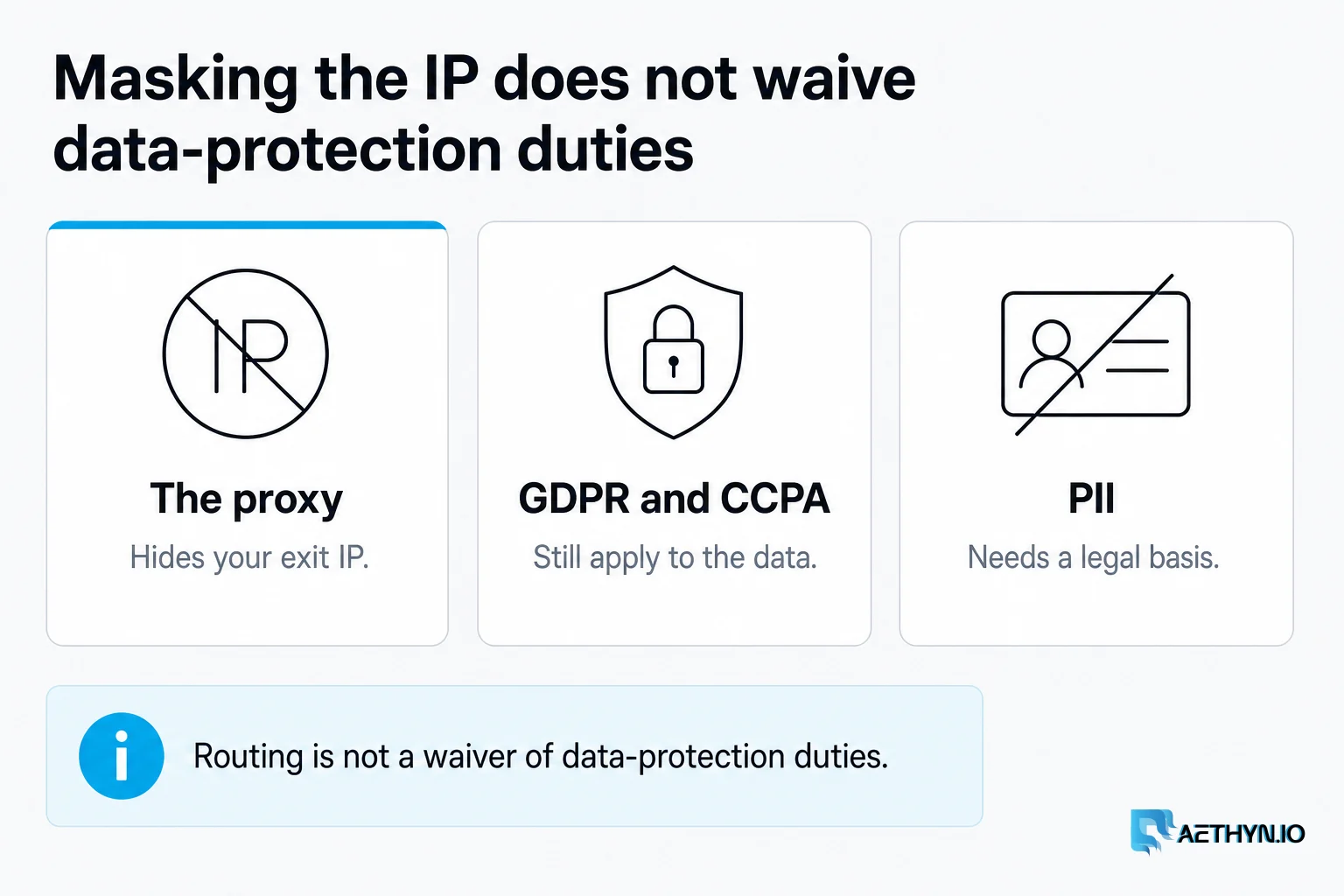
If you are using proxies to scrape personal data, you must comply with laws like the GDPR. Masking your IP doesn't exempt you from data protection responsibilities. Always ensure you are not collecting PII (Personally Identifiable Information) without a legal basis.
[!IMPORTANT] Important: This guide is for informational purposes and does not constitute legal advice. Always consult with a legal professional regarding your specific scraping projects.
Best Practices for 2026
- Transparent Sourcing: Only work with providers who can explain where their IPs come from.
- Respect Boundaries: Don't scrape sensitive personal data or bypass paywalls.
- Stay Informed: Laws regarding AI training data and web scraping are evolving rapidly in 2026.
Partner with an Ethical Provider
Aethyn is committed to building a transparent and compliant proxy network.
Guides, integrations & docs
Continue reading
What Is a Residential Proxy? Complete Beginner Guide (2026)
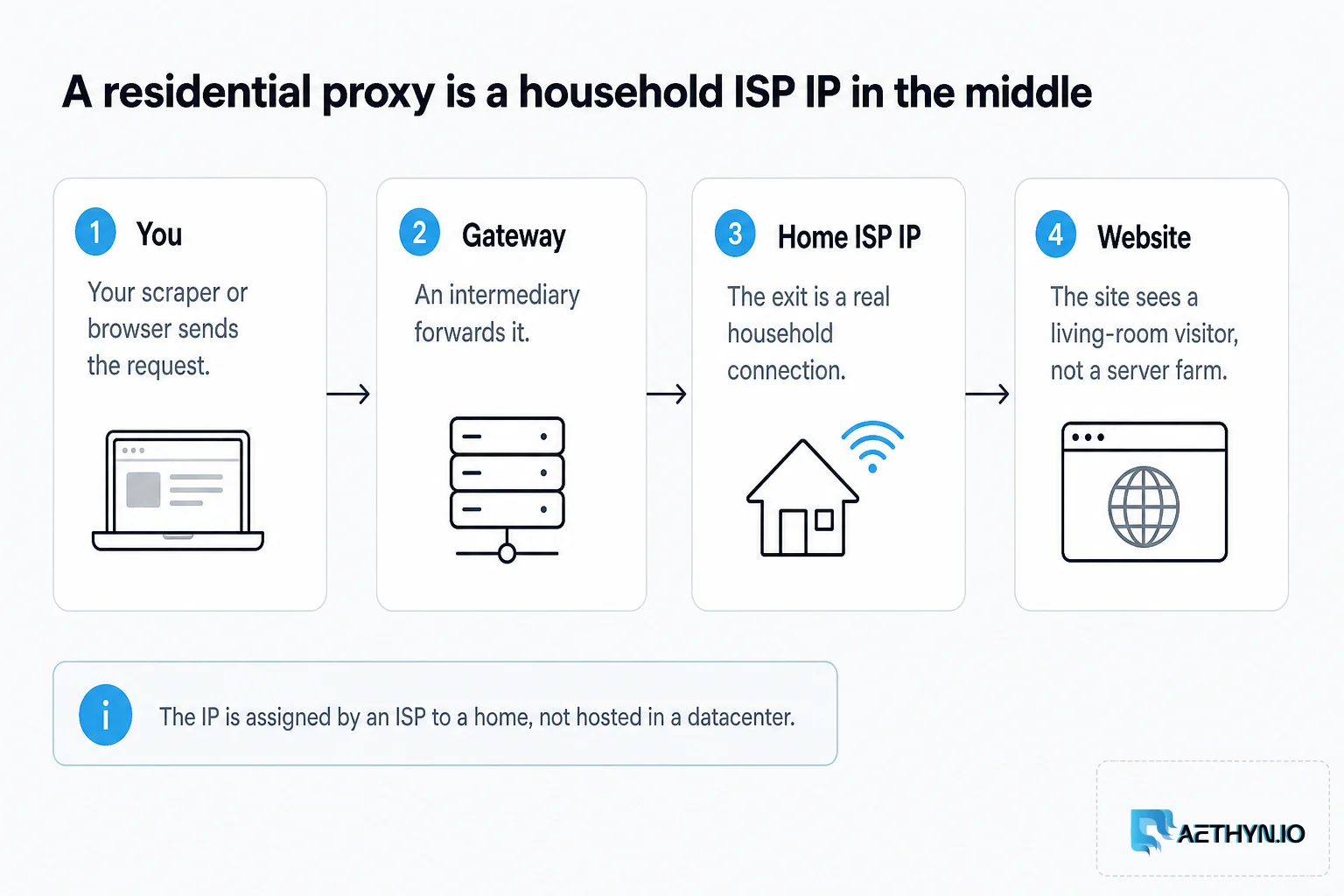
Learn everything about residential proxies: how they work, why they are more reliable than datacenter IPs, and how to use them for your business in 2026.
Aethyn ProxyVero Benchmark: Independent Residential Proxy Performance Test
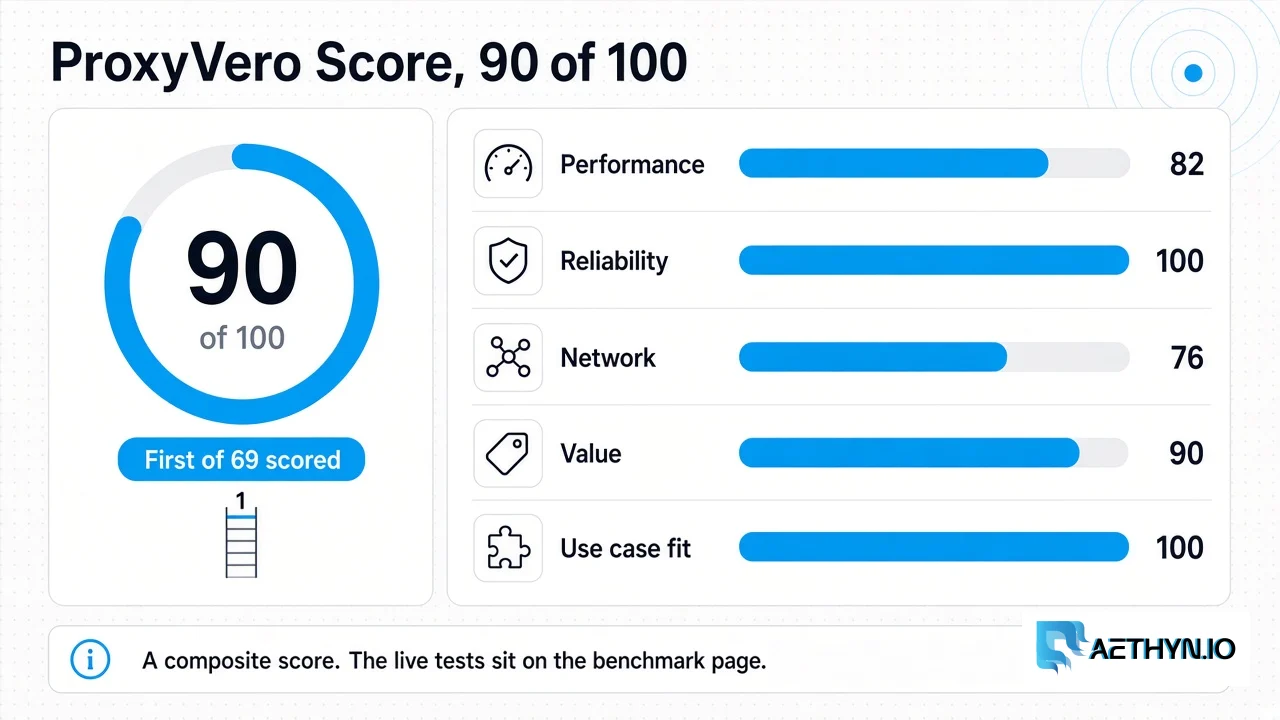
ProxyVero recorded 100% success and a 0% block rate for Aethyn on Google, Instagram, TikTok, Nike, and Amazon. The 90/100 score is a dated snapshot, set next to the August cohort.
Country-Level Targeting Isn't Enough: City and ISP Proxies Explained
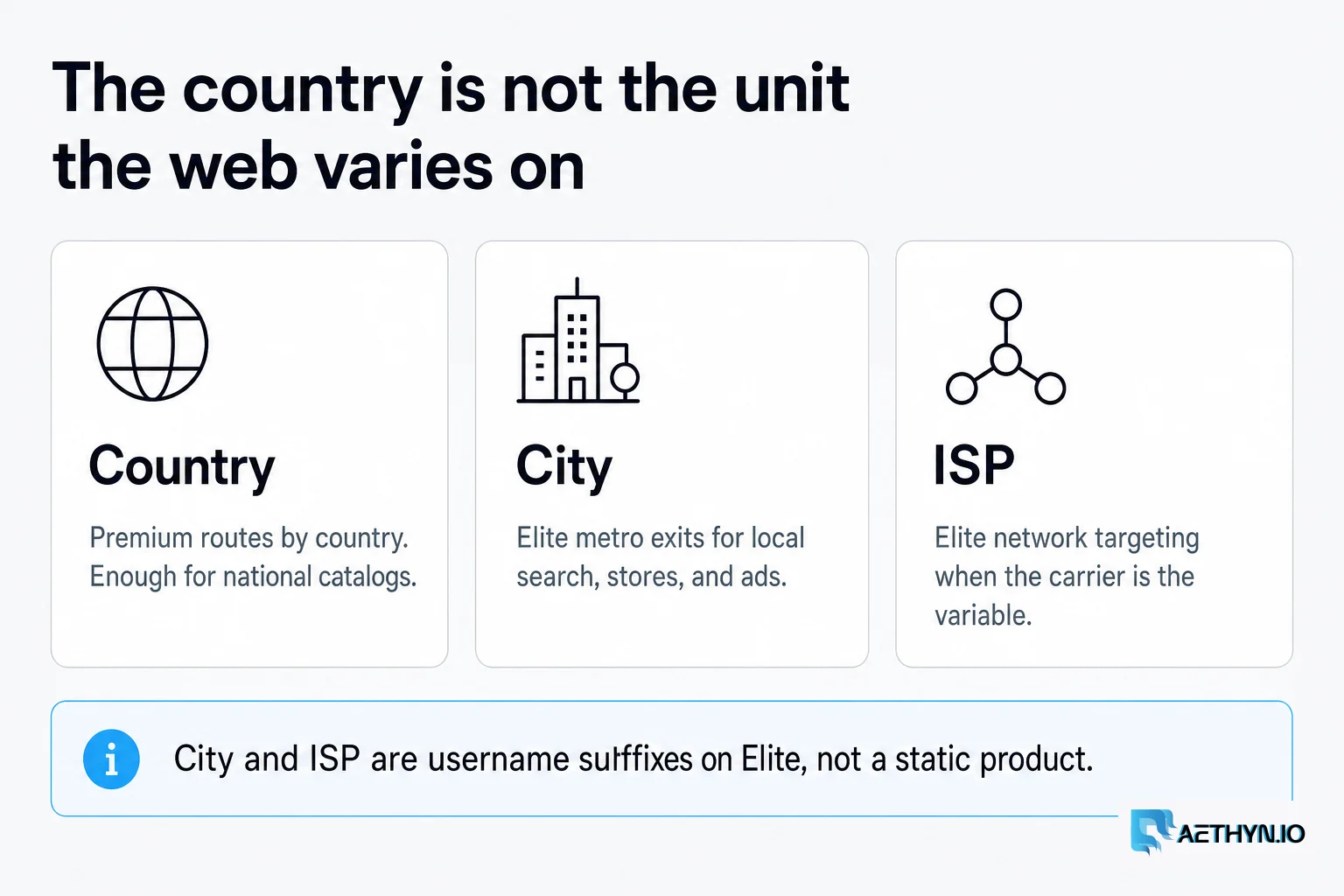
Country targeting fails silently. The page renders, the price parses, the row lands in your warehouse — describing a market nobody sells into. Here's when you need city or ISP granularity, when you don't, and how to prove the exit landed where you asked.
Premium or Elite residential proxies
Join developers scaling scraping and automation with Aethyn Premium and Elite pools from €2.00/GB.